
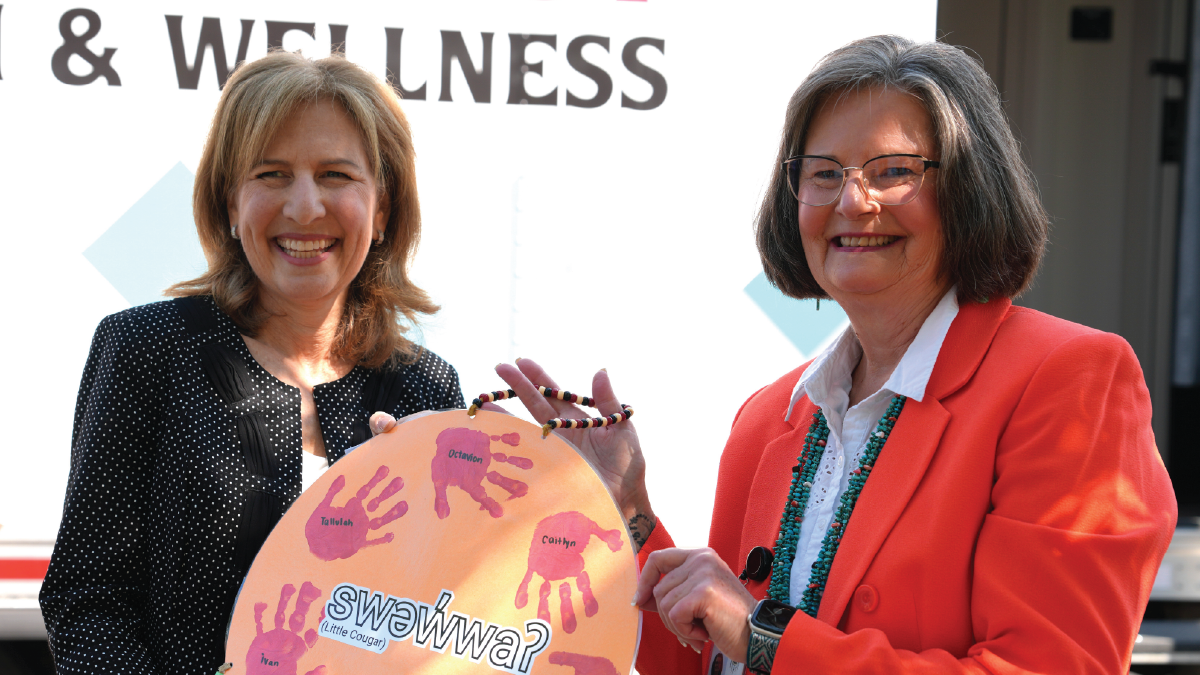
AUBURN — U.S. Rep. Kim Schrier visited the Muckleshoot Early Learning Academy on Aug. 7, meeting with Muckleshoot Indian Tribe leaders and staff to learn more about the Tribe’s Head Start program and the work being done to support the health, education and overall well-being of Muckleshoot children and families.
Muckleshoot Tribal Chairman Donny Stevenson and Tribal Councilmembers Virginia Cross and Eileen Richardson joined Early Childhood Education staff in welcoming Schrier to the academy and sharing the history and continued importance of Head Start in the Muckleshoot Community.
Muckleshoot’s connection to Head Start dates back to the program’s earliest days. In 1965, the Muckleshoot Indian Tribe received one of the first two federal Head Start grants awarded to Native American Tribes, along with the Navajo Nation.
Cross was hired as the Tribe’s first head Start director the same year, helping establish a program that has continued serving generations of Muckleshoot children and families for more than 60 years.
The visit gave Schrier an inside look at Muckleshoot Early Childhood Education and its partnerships with the Muckleshoot Health and Wellness Center, including efforts to bring medical, dental, nutrition and other services directly to children enrolled in the program.
The morning began with introductions and recognition of Muckleshoot Tribal Council members, followed by a video welcome from students in Lushootseed.
Staff then presented highlights from the Muckleshoot Head Start 2025- 2026 annual report, showing how early education at Muckleshoot extends beyond what happens inside the classroom.
A major focus of the presentation was the connection between health and school readiness and the importance of making services accessible to families.
Through its partnership with the Muckleshoot Health and Wellness Center, the Early Childhood Education program connects children with routine medical care, immunizations, health screenings, dental services and nutrition resources.
The partnership also includes the Mobile Health Clinic, which helps bring services closer to children and families rather than requiring families to navigate multiple locations for care.
For Head Start families, that access can mean identifying a health concern earlier, completing a needed screening or helping ensure a child is healthy and ready to learn.
During the 2025-26 program year, 100% of children enrolled in the program had health insurance and 100% had continuous, accessible health care, according to information presented during the visit.
The program also reported that 97% of children were up to date with the Early and Periodic Screening, Diagnostic and Treatment schedule for well-child care and 97% were up to date on immunizations.
All children who were eligible received preventive dental care.
The program reported 118 participants completed vision and hearing screenings, while 112 children completed growth assessments. Of those 112 children, 19 were at or above the 95th percentile.
Screenings and assessments also helped identify children who may need additional services or support, including 17 children with vision concerns and one with a hearing concern. The program reported 12 children identified with autism spectrum disorder.
The numbers were part of a larger message shared during the visit: Early childhood education and health are closely connected, and addressing children’s needs early can make a difference as they prepare to enter school.
Dental care has become another important part of that approach.
Muckleshoot Health and Wellness dental services provide children with oral exams and dental health screenings, preventive care and teeth cleanings, dental hygiene education and treatment referrals when additional care is needed.
Children have also had the opportunity to participate in a dental “field trip,” helping introduce them to dental care in a setting designed to make the experience familiar and less intimidating.
Nutrition services are incorporated into the program as well.
Children receive nutritious daily meals and snacks that meet U.S. Department of Agriculture Child and Adult Care Food Program standards. Nutrition education is also provided to children and families to encourage healthy eating habits and food choices.
Regular growth monitoring and developmental screenings allow staff to track each child’s progress and identify areas where additional support may be needed.
Mental and emotional health are also part of the program’s approach to supporting the whole child.
Muckleshoot Early Childhood Education contracts with the YMCA of Greater Seattle for mental health services, including classroom observations, teacher consultations, family consultations and direct services for children.
According to information presented during Schrier’s visit, the program’s current mental health consultant has worked in the Muckleshoot community for more than 16 years.
Staff also discussed how collaboration across Tribal departments can become especially important when a larger public health concern reaches the community.
During a measles response in 2025, Early Childhood Education nursing staff, the Muckleshoot Health and Wellness Center, public health leadership, Tribal Council, school programs and partner departments worked together to increase vaccination rates and help protect young children.
From March to August 2025, vaccination rates among children younger than 4 doubled, while vaccination rates among children 4 and older increased fivefold, according to the presentation. Both groups surpassed 95% completion for the measles, mumps and rubella vaccine, reaching the threshold associated with herd immunity.
The response was highlighted as an example of what can happen when Tribal programs work together and are able to respond directly to the needs of the community.
Throughout the presentation, staff emphasized that the goal is not simply to provide individual services, but to build a system around children and their families.
The Mobile Health Clinic plays a role in that work by expanding access to care and allowing services to reach families where they are. Early Childhood Education nurses also work alongside Muckleshoot Health and Wellness staff to coordinate vision and hearing screenings, blood pressure checks, lead screenings and growth assessments.
Schrier’s visit included a tour of the Mobile Health Clinic and the Early Learning Academy’s cultural playground, providing an opportunity to see some of the resources discussed during the presentation firsthand.
The visit concluded with gift presentations from children representing the Salmon, Cougar and Eagle classrooms, along with the Muckleshoot Child Development Center Head Start classroom.
For Muckleshoot Early Childhood Education, the visit provided an opportunity to show how the Tribe is approaching early learning through more than academics.
Health care, dental care, nutrition, mental health, family support and early identification of developmental needs are incorporated into a system intended to give children the support they need during some of their most important developmental years.
One message shared from a former Head Start student during the presentation captured what that support can mean from a child’s perspective.
“I just love it here, this school has everything I need,” the 7-year-old former student said after attending a family engagement event at the facility.
The congressional visit gave Muckleshoot staff the opportunity to share that work directly with Schrier and highlight how partnerships between Tribal programs are helping remove barriers to services for families.
It also showcased a model built around the idea that preparing children for school means caring for the whole child from their education and physical health to their emotional well-being and connection to community.

Meet two new additions to Muckleshoot Tribal Communications: Katie Manzanares, Tribal Communications Administrator, and Shayna Brown, Tribal Communications Coordinator.


More than 250 people gathered to honor Muckleshoot veterans and their families during the Tribe’s annual Veterans Day Dinner, an event rooted in deep respect for those who served.
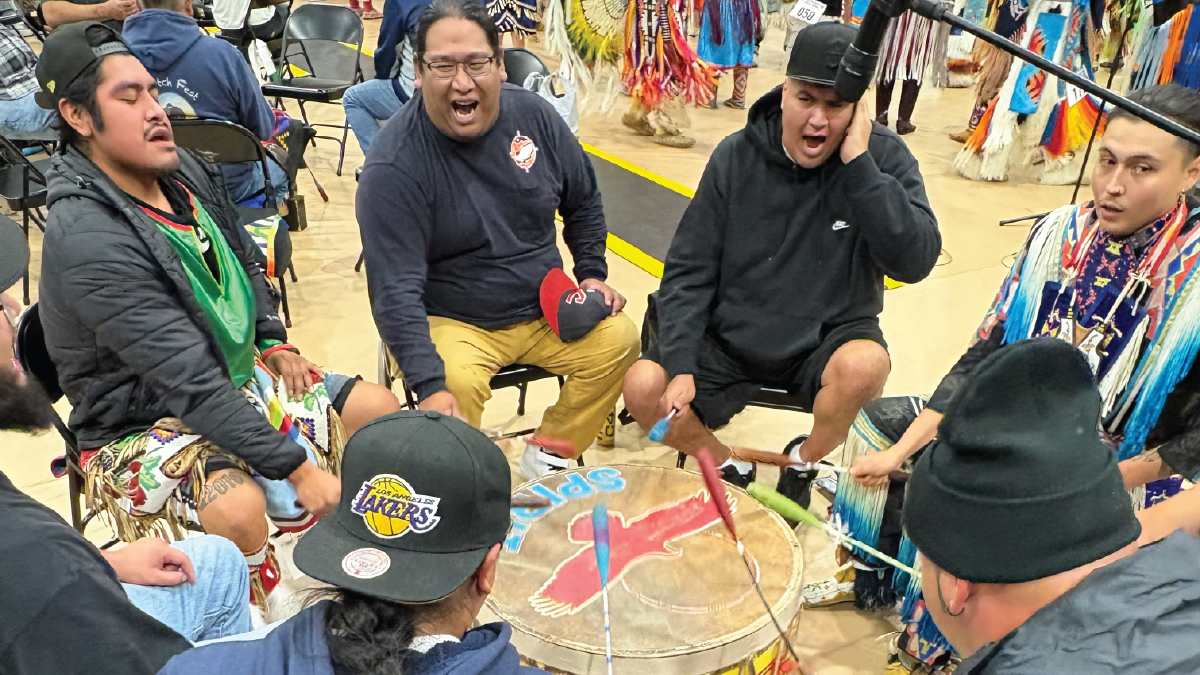
Hundreds of dancers, singers, families, and visitors gathered at the Muckleshoot Community Center for the annual Winter Powwow – an event that showcased the strength and beauty of many Tribal nations coming together.
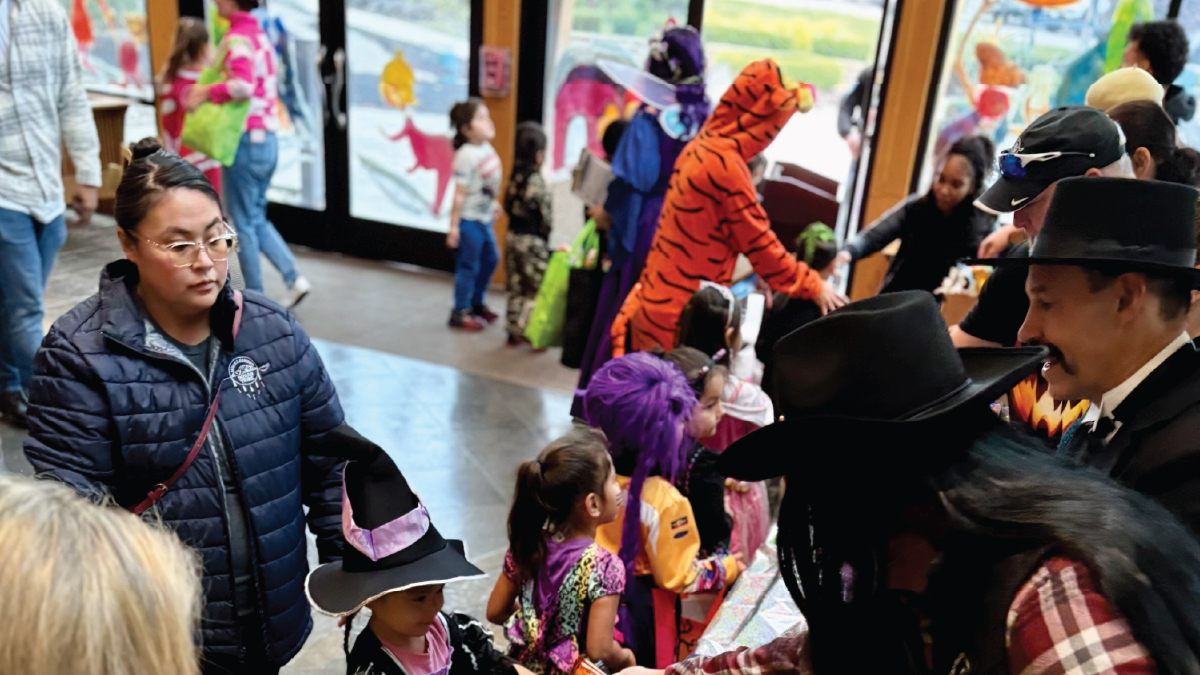
The Muckleshoot Halloween event brought together Tribal employees and the youngest members of the community for a fun, safe, and memorable morning. Departments lined the buildings with tables offering candy, small toys, and warm greetings.
The Muckleshoot Messenger is a monthly Tribal publication. Tribal community members and Tribal employees are welcome to submit items to the newspaper such as announcements, birth news, birthday shoutouts, community highlights, and more. We want to hear from you!

Please direct Media Inquiries to Muckleshoot Intergovernmental Affairs.
Official Government Website for the Muckleshoot Indian Tribe
© Muckleshoot Indian Tribe 2026


